
Have you ever felt the soothing warmth of a hot water bag on a chilly evening? It's a comfort that many of us cherish.
But did you know that filling a hot water bag correctly can make all the difference in ensuring safety and maximizing warmth? If you’ve ever been uncertain about how to fill your hot water bag properly or if you’ve had a less-than-pleasant experience in the past, you’re in the right place.
In this guide, you'll discover simple, effective steps to fill your hot water bag safely and efficiently. Imagine the relief and comfort you’ll feel knowing you’ve done it right, every single time. Keep reading, because the secret to perfect warmth is just a few paragraphs away!

Credit: www.amazon.com
Choosing The Right Hot Water Bag
Choosing the right hot water bag is key to ensuring comfort, safety, and durability. The market offers many options, so understanding what to look for helps you pick one that truly fits your needs. Let’s break down the essentials you should consider before filling your hot water bag.
Material Types
Hot water bags come in various materials, each with its own benefits. Rubber is the most common choice because it’s flexible and retains heat well. However, if you have sensitive skin, silicone bags might be gentler and less likely to cause irritation.
Some bags have soft fabric covers, which can add comfort and prevent burns. Think about where you’ll use the bag most—hard plastic might be durable for travel, but soft covers offer better comfort at home.
Size Options
Size matters more than you might expect. Smaller hot water bags are perfect for targeting sore spots like your neck or lower back. Larger bags cover broader areas and stay warm longer, ideal for overall warmth on cold nights.
Consider your own body size and how you plan to use the bag. If you want it for muscle relief after workouts, a small to medium size is handy. For cozying up in bed, a larger one can provide lasting heat.
Safety Features
Your safety should be a top priority when choosing a hot water bag. Look for bags with secure, leak-proof caps to avoid spills that could cause burns. Double-layered designs provide extra protection and reduce the risk of bursting.
Some hot water bags come with clear heat resistance ratings or certifications. These details show the manufacturer has tested the bag for safe use. Would you trust your comfort to a bag without these assurances?
Preparing The Hot Water
Preparing the hot water correctly is important for a safe and effective hot water bag. The right water temperature ensures comfort and prevents burns. Using clean water helps keep the bag in good condition and avoids leaks. Follow these simple tips to prepare the water perfectly.
Ideal Water Temperature
Use warm water that feels hot but not painful to touch. Around 104°F to 122°F (40°C to 50°C) works best. This temperature keeps the bag warm for a long time. It also prevents damage to the bag’s material.
Avoiding Boiling Water
Boiling water can make the bag burst or leak. It also increases the risk of burning your skin. Let boiling water cool down for a few minutes before filling the bag. This step protects both you and the hot water bag.
Using Filtered Water
Filtered water is free from dirt and minerals. It helps the hot water bag last longer and prevents blockages. Tap water may contain impurities that damage the bag. Using filtered water keeps your hot water bag clean and safe to use.
Filling The Hot Water Bag
Filling a hot water bag correctly ensures safe and effective use. It requires simple steps but careful attention. This process helps prevent burns and leaks. Follow the instructions carefully for the best results.
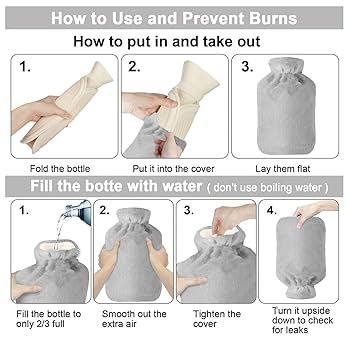
Step-by-step Filling Process
- Boil water and let it cool slightly to avoid damage.
- Hold the hot water bag upright with the opening facing up.
- Slowly pour the warm water into the bag, filling it about two-thirds full.
- Gently squeeze the bag to remove excess air.
- Keep the bag steady to avoid spilling hot water.
Checking For Leaks
- Close the bag’s opening tightly before testing.
- Hold the bag over a sink or basin.
- Press the bag gently to check for any water leaks.
- Look carefully for water escaping from seams or the cap.
- If leaks appear, empty the bag and inspect the damage.
Sealing The Bag Properly
- Ensure the cap or stopper fits securely in the opening.
- Twist or press the seal firmly to prevent leaks.
- Double-check by squeezing the bag gently once sealed.
- Wipe any spilled water from the outside before use.
- Store the bag flat and away from sharp objects.

Credit: www.amazon.com
Using The Hot Water Bag Safely
Using a hot water bag safely is key to getting relief without causing harm. It’s easy to forget that hot water bags, while comforting, can cause burns or discomfort if not handled properly. Paying attention to how you place the bag, how long you use it, and how to avoid burns can make your experience both soothing and safe.
Placement Tips
Place the hot water bag on the area that needs warmth, but never directly on bare skin. Always wrap it in a towel or cloth to create a barrier. This prevents direct heat contact, reducing the risk of burns.
Think about where you feel the most tension or pain, and position the bag there. Avoid placing it on sensitive areas like the face or on open wounds. Your comfort depends on careful placement, so adjust the bag if you feel too much heat.
Avoiding Burns
Burns happen when the heat is too intense or applied for too long. To avoid this, test the temperature on your wrist before using the bag. If it feels too hot, let it cool down a bit.
- Check the bag regularly for leaks or cracks.
- Never overfill the bag; hot water can spill and cause burns.
- Don’t use boiling water—hot, but not boiling, is safest.
I once ignored these tips and ended up with a painful burn that lasted days. That experience taught me that patience with heat is better than rushing for quick relief.
Duration Of Use
Limit your use of the hot water bag to 15-20 minutes at a time. Prolonged exposure can irritate your skin or cause burns, even through a cloth. Take breaks between sessions to let your skin cool down.
Ask yourself: How does your skin feel after using the bag? If there’s redness or discomfort, it’s time to stop. Safe use means balancing heat therapy with skin health.
Maintaining Your Hot Water Bag
Maintaining your hot water bag properly is key to making it last longer and stay safe to use. Taking a few simple steps can prevent leaks and keep the material in good shape. It also ensures that every time you need warmth, your hot water bag performs perfectly.
Cleaning Instructions
Cleaning your hot water bag regularly helps avoid unpleasant odors and bacteria buildup. Use a mild soap solution and a soft cloth to gently wipe the surface. Avoid harsh chemicals or abrasive scrubbers as they can damage the bag’s material.
Rinse thoroughly with clean water and let it air dry completely before storing. Never submerge the entire bag in water, as this might weaken the seams. Do you check your hot water bag’s cleanliness after every use?
Storage Tips
Store your hot water bag in a cool, dry place away from direct sunlight to prevent the rubber from cracking. Make sure it is completely empty and dry before putting it away. Folding it loosely rather than tightly rolling helps maintain its shape.
Avoid placing heavy objects on top of the bag during storage. If you have multiple hot water bags, keep them separated to prevent sticking together. How often do you inspect your storage area for potential damage risks?
When To Replace
Keep an eye out for signs like cracks, leaks, or thinning material, which indicate it’s time to replace your hot water bag. If the stopper or cap no longer seals tightly, don’t risk a spill or burn. Small punctures can sometimes be patched, but extensive damage means a new bag is safer.
Using an old or damaged hot water bag can be dangerous and reduce its effectiveness. Trust your instincts—if something feels off, it probably is. Have you ever delayed replacing a worn hot water bag and regretted it later?

Credit: www.gosupps.com
Frequently Asked Questions
How Do You Safely Fill A Hot Water Bag?
Always use hot, not boiling, water to fill the bag. Fill it halfway to avoid bursting. Seal the opening tightly to prevent leaks. Check for any damage before use. Handle the bag gently to avoid burns or spills.
What Type Of Water Is Best For Hot Water Bags?
Use clean, hot tap water for filling the bag. Avoid boiling water as it can damage the bag. Clean water ensures safety and prevents odors. Using fresh water each time helps maintain hygiene and bag longevity.
How Much Water Should I Put In The Hot Water Bag?
Fill the bag about two-thirds full with hot water. This allows room for the water to move. Overfilling increases the risk of leaks or bursts. Proper filling ensures effective heat retention and safety during use.
Can I Use Cold Water In A Hot Water Bag?
Cold water can be used but it won't provide warmth. Hot water bags are designed for heat therapy. Using cold water defeats their primary purpose. For cold therapy, use ice packs specifically designed for that.
Conclusion
Filling a hot water bag is simple and safe with the right steps. Always use warm, not boiling water to avoid damage. Seal the bag tightly to stop leaks. Check for any holes before each use. A properly filled hot water bag gives comfort and warmth quickly.
Keep it away from sharp objects and direct heat. Follow these tips to enjoy its benefits every time. Easy to use, helpful for pain or cold days. Your hot water bag will last longer with good care.