

Are you planning a trip to Japan and wondering if you can bring luggage on the Shinkansen, the country's famous bullet train? You're not alone.
Many travelers find themselves asking this question as they plan their journey across Japan. The good news? You can bring luggage on the Shinkansen, but there are a few things you should know to make your travel experience smooth and stress-free.
Imagine gliding across the Japanese countryside at incredible speeds, all while knowing your bags are securely in tow. Sounds great, right? We'll uncover all the details about Shinkansen luggage policies, share some insider tips, and help you avoid any surprises. Ready to make your trip hassle-free? Let's dive in!

Luggage Rules On Shinkansen
Traveling on the Shinkansen comes with specific luggage rules. These rules help keep the train safe and comfortable for all passengers. Knowing these guidelines makes your trip smooth and hassle-free.
Size And Weight Limits
Each passenger can bring luggage within certain size and weight limits. The combined dimensions of your luggage—length, width, and height—must not exceed 160 cm. Bags heavier than 30 kg are not allowed on board.
Large suitcases may require advance reservation or special handling. Small bags can be stored in overhead compartments or under seats. Always check luggage size before your trip to avoid problems.
Prohibited Items
Some items are banned on the Shinkansen for safety reasons. Dangerous goods like explosives, flammable liquids, and toxic substances cannot be brought. Sharp objects must be securely wrapped or packed.
Animals and perishable goods are usually not allowed unless approved. Electronic devices with large batteries might have restrictions. Follow these rules to ensure a safe journey for everyone.
Types Of Luggage Allowed
Traveling on the Shinkansen requires knowing the types of luggage allowed. This helps ensure a smooth journey without delays. Different luggage sizes and shapes have specific rules. Understanding these rules makes packing easier and travel more comfortable.
Here is a clear guide on what luggage you can bring on the Shinkansen.
Carry-on Bags
Small carry-on bags are easy to bring onboard. These include backpacks, handbags, and small suitcases. They must fit in the overhead racks or under the seat. Typical size limits are about 55 cm by 40 cm by 25 cm. Keep your carry-on bags light for easy handling.
Large Suitcases
Large suitcases are allowed but have some rules. They should not exceed 250 cm in total dimensions (length + width + height). If your suitcase is large, use the designated luggage area at the end of each car. Reserve a seat with luggage space for convenience. Avoid blocking aisles or seats with your suitcase.
Special Items
Special items like sports gear or musical instruments need extra care. Long items may not fit in overhead racks. Use the luggage space or consult staff for help. Items like bicycles require disassembly and a carrying case. Always check in advance for any specific rules on special items.
Storage Options On Board
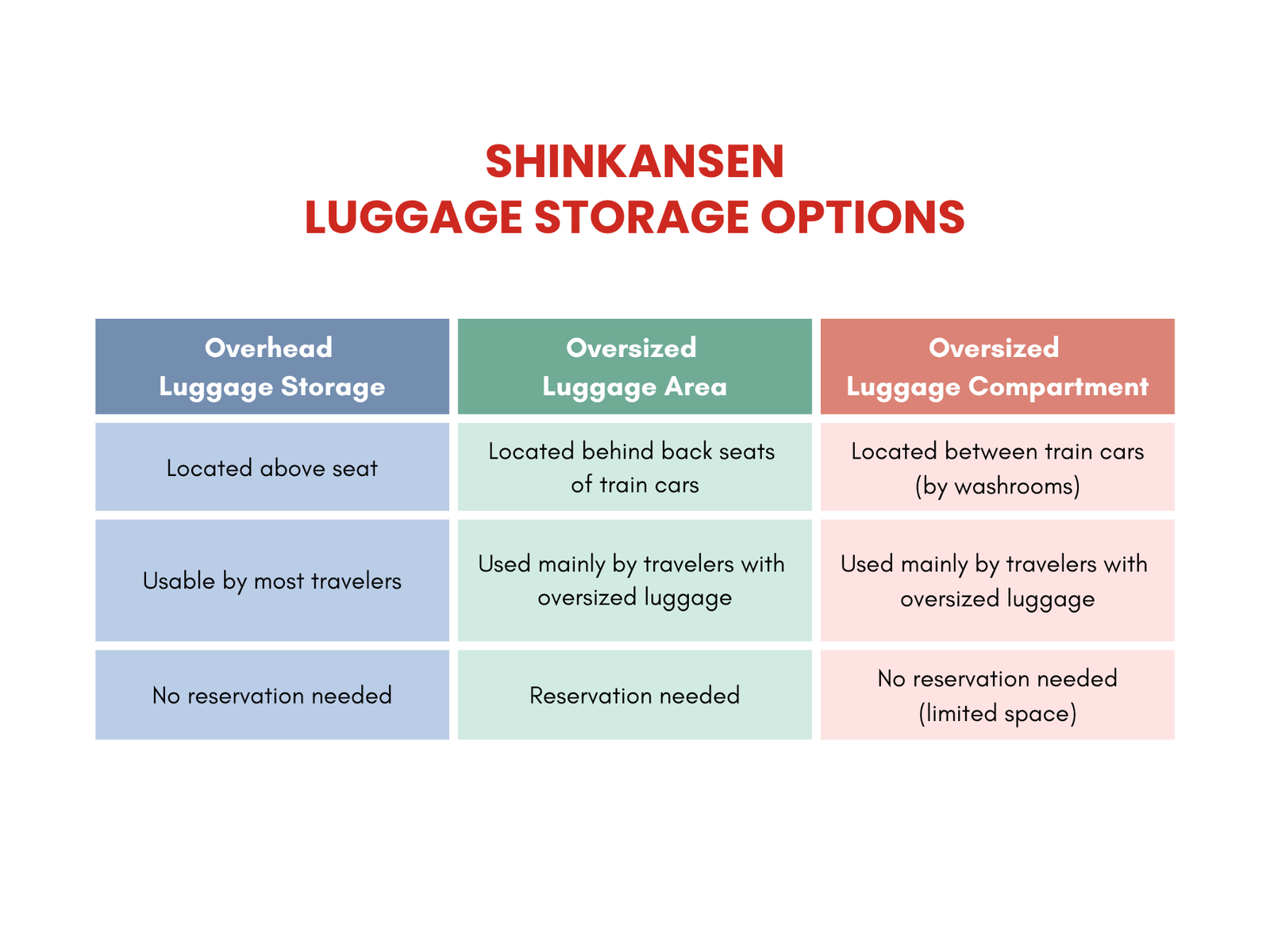
Traveling on the Shinkansen is fast and comfortable. Managing your luggage on board is simple with several storage options. Each option fits different types and sizes of luggage. You can choose the best place to store your bags for a smooth trip.
Overhead Racks
Small to medium bags fit well in the overhead racks above your seat. These racks are spacious and easy to access. Keep your luggage secure and close to you. Avoid placing heavy items here to prevent accidents.
Designated Luggage Areas
Some Shinkansen trains have special spaces for larger luggage. These areas are near the doors or at the end of each car. Larger suitcases and bulky items fit perfectly in these spots. Make sure to check for these spaces when booking your ticket.
Using Station Lockers
Station lockers are a good choice for very large or extra bags. You can store luggage safely before boarding. This option helps travel light inside the train. Lockers come in different sizes and are available at most Shinkansen stations.

Booking Tips For Travelers With Luggage
Traveling on the Shinkansen with luggage can be smooth and stress-free if you plan ahead. Booking your ticket with your baggage in mind helps avoid last-minute hassles and ensures a comfortable journey. Here are some practical tips to keep in mind when reserving your seat.
Reserved Seats With Extra Space
Choosing reserved seats designed for passengers with larger luggage is a smart move. These seats, usually located at the ends of each car, offer extra space for your bags. Booking these seats early can save you the trouble of juggling your luggage in tight aisles.
Have you noticed how crowded trains feel when everyone struggles with big suitcases? Securing a seat with extra space not only gives you comfort but also helps keep the train aisles clear for other passengers.
Luggage Reservation System
The Shinkansen now offers a luggage reservation system for oversized bags. This service lets you reserve a spot specifically for your large suitcase, avoiding last-minute rearrangements. It’s especially useful if your luggage exceeds the standard size limits.
Remember, not all trains have this system, so check ahead when booking. Reserving your luggage space guarantees that your bags travel safely without blocking pathways or inconveniencing others.
Timing Your Travel
Picking the right time to travel can make a big difference if you have a lot of luggage. Avoid peak hours like early mornings and late afternoons when trains are crowded. Traveling during off-peak times gives you more freedom to manage your bags comfortably.
Think about your schedule: could a train at midday or late evening offer a quieter ride? Less crowded trains mean easier boarding and more space to handle your luggage without stress.
Alternatives For Handling Large Luggage
Traveling on the Shinkansen with large luggage can be tricky. Space inside the train is limited. Many travelers seek easy ways to manage big bags. Several alternatives exist to keep your journey smooth and stress-free.
Parcel Delivery Services
Parcel delivery services are popular in Japan. You can send your luggage ahead to your hotel or next destination. This service is fast and reliable. It saves space on the train and lets you travel light. Prices vary by size and distance but remain affordable. Booking is simple at convenience stores or train stations. Your bags arrive safely while you enjoy the ride without heavy luggage.
Using Nearby Hotels For Storage
Hotels near major stations often offer luggage storage. You can leave large bags there for a few hours or days. This option suits those exploring the city before or after the train ride. Some hotels allow storage even without booking a room. Check with the hotel reception for availability and fees. Storing luggage nearby lets you walk freely and use public transport with ease.

Common Mistakes To Avoid
Traveling on the Shinkansen can be smooth with proper luggage planning. Many travelers make simple mistakes that cause stress and delays. Knowing what to avoid helps ensure a better experience.
Overpacking Issues
Bringing too much luggage creates problems on the Shinkansen. Space for bags is limited. Large or heavy suitcases may block aisles or take up extra seats. Overpacked bags slow boarding and exit times. Keep luggage light and compact for easy handling.
Ignoring Luggage Policies
Each Shinkansen line has rules about luggage size and quantity. Ignoring these rules risks extra fees or refusal to board. Some trains require advance reservation for large bags. Always check the latest luggage policies before traveling. Follow guidelines to avoid surprises at the station.
Late Arrivals At Stations
Arriving late causes rush and stress. Stations can be large and busy. Extra time is needed to find the platform and store luggage. Late arrivals can miss luggage checks or boarding calls. Plan to arrive early to relax and manage your bags calmly.
Frequently Asked Questions
Can I Bring Large Luggage On Shinkansen Trains?
Yes, you can bring large luggage on Shinkansen. Each passenger may carry up to two large bags. Bags must fit in designated storage areas or overhead racks. For very large items, booking a seat with dedicated luggage space is recommended.
Are There Luggage Size Restrictions On Shinkansen?
Shinkansen allows luggage up to 250 cm total dimensions (length + width + height). Bags exceeding this size may require special arrangements. Smaller bags fit easily in overhead racks or under seats. Always check your train’s luggage policy before travel.
Is There Extra Luggage Storage On Shinkansen?
Yes, Shinkansen trains provide overhead racks and space behind the last row for luggage. Some trains offer reserved large luggage spaces for an additional fee. Booking in advance ensures your luggage fits comfortably and avoids inconvenience during travel.
Can I Carry Luggage Without Reservation On Shinkansen?
You can carry luggage without reservation, but large bags may need advance booking. Reserved luggage spaces are limited and recommended for oversized items. Smaller bags don’t require reservation and fit in regular storage areas. Always verify luggage rules for your train.
Conclusion
Traveling with luggage on the Shinkansen is simple with some planning. You can bring bags but must follow size rules. Large suitcases need special spots or reservations. Keep your bags close to avoid delays. Knowing these tips helps you enjoy a smooth trip.
Pack smart to travel comfortably and stress-free. The Shinkansen is fast and convenient for travelers with luggage. Your journey will be easier when you prepare well. Safe travels and happy riding!