

Planning your next trip and wondering how much liquid you can carry in your hand luggage? We've all been there, staring at our toiletry bag and questioning if our favorite shampoo or lotion will make it through security.
Getting it wrong could mean losing your essentials or facing delays. But don't worry, we're here to help! In this post, you'll discover the exact number of ounces allowed in your carry-on, plus some savvy tips to pack smartly. Stick with us, and you'll breeze through the airport with confidence, keeping all your must-have liquids right by your side.
Ready to pack like a pro? Let's dive in!

Tsa Liquid Rules
Understanding the TSA liquid rules is essential before packing your carry-on. These rules ensure safety while letting you bring necessary liquids on board. Knowing exactly how much liquid you can carry helps avoid delays and surprises at the security checkpoint.
3-1-1 Rule Explained
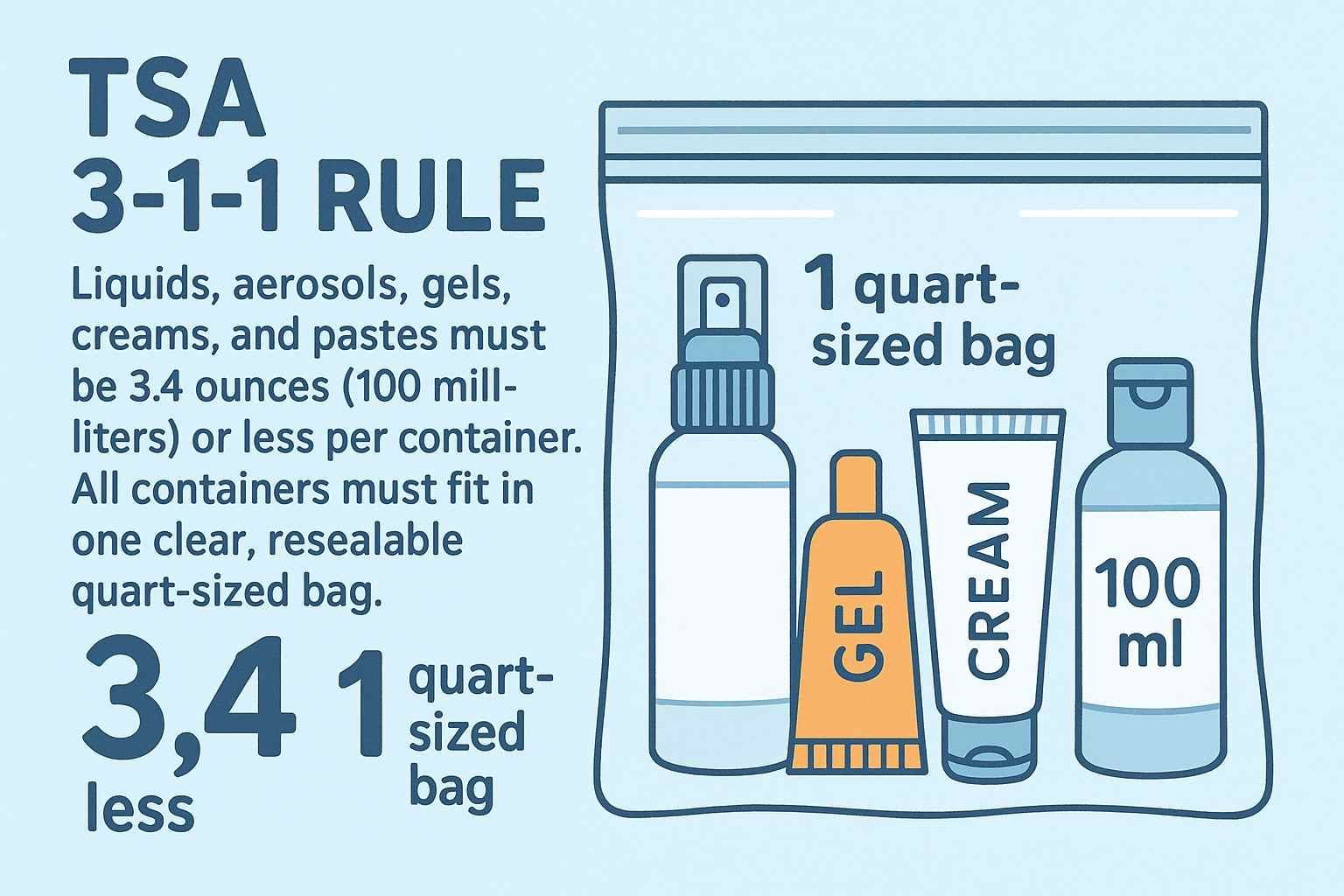
The 3-1-1 rule is the TSA’s way of managing liquids in carry-on bags. You can bring liquids in containers of 3.4 ounces (100 milliliters) or less. All containers must fit inside one clear, quart-sized plastic bag, and each passenger is allowed only one bag.
This rule keeps the screening process smooth and quick. Have you ever struggled to fit your toiletries in one bag? This limit forces you to pack smart and prioritize what you really need.
Allowed Container Sizes
Each liquid container must be 3.4 ounces or smaller. This means your shampoo, lotion, or any other liquid item must fit this size. Larger bottles, even if partially full, won’t be allowed in your carry-on.
Travel-sized bottles are your best friend here. If you don’t have them, consider buying reusable travel containers. They help you avoid tossing your favorite products or buying expensive airport versions.
Total Liquid Volume Limits
All your liquid containers combined must fit inside one quart-sized bag. This typically holds about 32 ounces total. It’s not just about each bottle’s size but also the total volume you carry.
Think about this: can you really carry everything you want in a small bag? Limiting total volume forces you to choose essentials wisely. Next time you pack, test how much your liquids really take up before you arrive at the airport.
Types Of Liquids Allowed
Knowing what types of liquids you can bring in your carry-on is essential to breeze through airport security. The rules aren't just about water or soda; they cover a wide range of substances you might not immediately think of. Understanding these categories helps you pack smarter and avoid last-minute hassles.
Liquids, Gels, And Aerosols
These three categories are treated similarly by airport security. Liquids include anything in a liquid state like water, juice, or shampoo. Gels cover items like toothpaste and hair gel, while aerosols refer to spray cans such as deodorant or hairspray.
Each container must be 3.4 ounces (100 milliliters) or less. All containers need to fit comfortably in a single, clear, quart-sized bag. Have you ever tried squeezing a large bottle of shampoo into your carry-on only to be stopped? That’s why knowing these limits saves time.
Exceptions To The Rules
Not everything liquid-sized or gel-like is restricted. Some exceptions exist for items that are essential or medically necessary. For example, duty-free liquids bought after security screening usually don’t count toward your liquid limit if sealed properly.
Also, liquids like food or drink purchased inside the airport after security can be carried on board without restrictions. It’s smart to ask yourself: Can I buy this after security and avoid the hassle? This can help you decide what to pack or purchase at the airport.
Medications And Baby Products
Medications, baby formula, and breast milk get special treatment. You can carry more than 3.4 ounces of these if needed, but you must declare them at the security checkpoint. This rule is designed to accommodate essential health needs and make travel easier for parents.
Always keep these items separate from other liquids in your bag and inform the TSA officer. Imagine the stress of being questioned about your baby’s formula right before a flight—declaring it upfront avoids that. Have you packed your medications this way before? It might be time to start.
Packing Tips For Carry-on Liquids
Packing liquids in your carry-on can feel tricky, but it doesn’t have to be stressful. Knowing how to choose containers, organize your items, and use the right bags makes the process smooth and keeps you ready for security checks. Let’s break down practical tips that help you pack liquids smartly and save time at the airport.
Choosing The Right Containers
Pick containers that hold 3.4 ounces (100 milliliters) or less. This size fits TSA rules and avoids surprises at the checkpoint.
Look for sturdy, leak-proof bottles or travel-sized spray bottles. Soft squeeze tubes work well for lotions and gels, reducing the chance of spills.
Consider clear containers so you can easily see what’s inside. This speeds up your packing and helps you remember what you brought.
Organizing Liquids For Screening
Keep all your liquids together in one place. Grouping them helps you avoid digging through your bag and reduces delays during security screening.
Place your liquid containers upright to prevent spills. Use small pouches or compartments inside your carry-on to keep everything stable.
Ask yourself: Have I double-checked the size limits and arranged my liquids in an easy-to-access spot? This simple habit can save you from last-minute repacking.
Using Tsa-approved Bags
TSA-approved clear bags are designed to hold liquids and speed up security checks. They typically hold about one quart and zip closed securely.
Choose bags that are reusable and durable. They keep your liquids safe and organized on every trip.
Pro tip: Keep your TSA bag easily reachable at the top of your carry-on. Being ready to pull it out quickly shows you’re a savvy traveler and helps keep lines moving fast.

Common Mistakes To Avoid
Travelers often make simple errors when packing liquids in carry-on bags. These mistakes can cause delays or even the loss of items at airport security. Knowing what to avoid helps make your trip smoother.
Small errors can lead to big problems. Avoiding common pitfalls saves time and stress during your airport experience.
Overpacking Liquids
Carrying too many liquids is a frequent issue. Airlines usually limit liquids to one quart-sized bag. Packing more than allowed can cause security to reject your bag.
Remember, all liquid containers must fit in the single clear bag. Overpacking can lead to throwing away items or missing your flight.
Incorrectly Sized Containers
Using containers larger than the allowed size is another problem. The limit is usually 3.4 ounces (100 milliliters) per container. Larger bottles, even if partly full, are not accepted.
Transfer liquids into smaller bottles before you pack. This step avoids confusion and possible confiscation at security checkpoints.
Not Declaring Exceptions
Some items like medications, baby formula, or breast milk are exceptions. Not telling security about these can cause delays. Declare these items clearly to the officers.
Keep these items separate from other liquids. Being upfront helps security officers handle your belongings quickly and with care.
Updates For 2026
Travel rules for carrying liquids in your carry-on bag will change in 2026. These updates aim to improve security and speed up the screening process. Travelers should know the new rules to avoid delays and confusion at airport checkpoints.
New Tsa Regulations
The TSA has set new limits on how many ounces of liquid you can bring. The standard 3.4-ounce (100 ml) rule still applies, but there are more details on packaging and types of liquids allowed. Liquids must be in clear, quart-sized bags, just like before.
Some exceptions now include medications, baby formula, and breast milk, which are allowed in larger amounts but must be declared. The TSA also encourages travelers to pack liquids carefully to avoid spills and delays during inspection.
Technological Changes In Screening
New scanning machines can now detect liquids without removing them from bags. This technology helps TSA officers identify suspicious items faster. It reduces the need for manual checks and speeds up the entire security line.
These advanced scanners use better imaging to separate liquids from other items. They improve accuracy and lower the chance of false alarms. Travelers will spend less time unpacking liquids during screening.
Impact On Travelers
Travelers will find security checks smoother and faster in 2026. Knowing the updated liquid limits and packing rules saves time at the checkpoint. Carrying liquids in the approved containers and bags reduces hassle.
Those who travel often will appreciate fewer delays and clearer instructions. Understanding the new rules helps avoid frustration and missed flights. Overall, these changes aim to create a safer and more efficient travel experience.
Alternative Options For Liquids
Carrying liquids on a plane can be tricky due to strict rules. Travelers must find smart ways to bring essential liquids without breaking regulations. Several alternatives help avoid the hassle of measuring and packing liquids under the limit. These options offer convenience and peace of mind during your journey.
Buying Liquids After Security
Buy liquids after passing airport security to skip size limits. Duty-free shops offer many products like perfumes, drinks, and lotions. These items are packed in sealed bags, making them safe to carry on. This option frees you from worrying about the 3.4-ounce rule for carry-on liquids.
Shipping Liquids Separately
Send liquids in advance through shipping services to your destination. This option works well for longer trips or special items. Make sure to pack liquids securely to avoid spills during transport. Shipping allows you to travel light and avoid liquid restrictions at the airport.
Using Solid Alternatives
Choose solid versions of liquid products to save space and avoid rules. Solid shampoos, conditioners, and lotions are easy to carry and last long. Bars and sticks replace liquids and gels with no risk of leaks. These alternatives simplify packing and speed up security checks.
Frequently Asked Questions
How Many Ounces Of Liquid Are Allowed In Carry-on?
You can carry liquids up to 3. 4 ounces (100 milliliters) per container in carry-on bags. All containers must fit in one quart-sized, clear, resealable plastic bag.
Can I Bring More Than 3.4 Oz Of Liquid In Carry-on?
No, TSA strictly limits liquids to 3. 4 ounces per container in carry-on bags. Larger amounts must be packed in checked luggage.
Are Liquids In Carry-on Bags Measured In Ounces Or Milliliters?
Liquids are measured in both ounces and milliliters. The limit is 3. 4 ounces or 100 milliliters per container for carry-ons.
What Types Of Liquids Are Restricted In Carry-on Luggage?
Liquids like water, lotions, gels, and aerosols are restricted to 3. 4 ounces in carry-ons. Exceptions include medications and baby formula with proper documentation.
Conclusion
Knowing the liquid rules helps you pack smart for your flight. Keep each container at 3. 4 ounces or less. All liquids must fit in one clear, quart-sized bag. Following these rules speeds up airport security checks. Avoid delays and keep your trip smooth.
Always check your airline’s specific guidelines before packing. Travel light, travel easy.