

Are you ready to punch your way to better fitness? Training on a boxing bag is not just a workout; it's a powerful stress-buster that sharpens your reflexes and builds your strength.
Imagine feeling the rush of endorphins as you unleash your inner fighter, all while sculpting a lean, agile body. Whether you're a beginner or an experienced boxer, mastering the art of bag training can elevate your fitness game to new heights.
Stay with us, and you’ll discover tips and techniques that can transform your boxing skills and keep you coming back for more. Ready to get started? Let's dive into the world of boxing bag training and unleash the champion within you.

Choosing The Right Boxing Bag
Choosing the right boxing bag is key to effective training. The right bag helps improve your technique, strength, and endurance. It should match your skill level and training goals. This choice makes your workouts safer and more enjoyable.
Types Of Boxing Bags
There are several types of boxing bags. Heavy bags help build power and endurance. Speed bags improve hand-eye coordination and speed. Double-end bags increase accuracy and timing. Each type serves a different purpose in training.
Bag Size And Weight
Size and weight affect how the bag moves and feels. A heavier bag stays steady, good for power punches. Lighter bags swing more, helping with timing and speed. Choose a bag size that suits your height and strength.
Material And Durability
Look for bags made from strong materials like leather or synthetic leather. These last longer and handle heavy use. Durable bags resist tears and wear. Check the stitching and fill quality to ensure the bag holds up well.
Essential Boxing Gear
Training on a boxing bag requires the right gear. Essential boxing gear protects your hands, feet, and body. It also helps you train longer and safer. Using proper equipment improves your technique and comfort. Here are the key items you need before starting your workout.
Gloves And Hand Wraps
Gloves protect your knuckles and wrists from injury. Choose gloves that fit well and have good padding. Hand wraps add extra support to your wrists and fingers. They also keep your gloves clean and absorb sweat. Wrap your hands tightly but comfortably before wearing gloves.
Proper Footwear
Good shoes help you move quickly and stay balanced. Boxing shoes offer ankle support and have thin soles for better grip. Avoid running shoes or heavy sneakers. Lightweight shoes allow faster footwork and reduce slipping on the floor. Choose shoes made for indoor use to protect your feet.
Protective Equipment
Use protective gear to avoid injuries during training. A mouthguard protects your teeth and jaw. Headgear cushions your head from accidental hits. Groin protectors shield sensitive areas from impact. Wear equipment that fits well and feels comfortable. This gear keeps you safe and confident in training.
Basic Boxing Bag Techniques
Training on a boxing bag goes beyond just throwing punches. Mastering the basic techniques sets the foundation for improving your speed, power, and endurance. By focusing on stance, punches, and breathing, you build the control and rhythm needed to get the most from every session.
Stance And Footwork
Your stance is the base for every move you make on the bag. Stand with your feet shoulder-width apart, one foot slightly forward depending on your dominant hand. This position keeps you balanced and ready to move quickly.
Move lightly on your toes, not your heels. Practice stepping forward, backward, and side to side without losing your balance. Ask yourself—can you stay steady while shifting your weight? If not, slow down and focus on smooth, controlled steps.
Basic Punches
Start with the four basic punches: jab, cross, hook, and uppercut. The jab is a quick, straight punch with your lead hand. Use it to measure distance and set up your next move.
The cross follows as a powerful punch from your rear hand, rotating your hips for extra force. Hooks come from the side, and uppercuts rise from below—both requiring good wrist control. Try throwing each punch slowly at first to nail the technique, then speed up.
- Jab:Quick, straight, and sharp.
- Cross:Power punch with hip rotation.
- Hook:Circular punch aimed at the side.
- Uppercut:Rising punch from below.
Breathing And Rhythm
Breathing correctly keeps your energy up and helps you maintain rhythm. Exhale sharply with each punch; this tightens your core and adds power. Holding your breath makes you tire faster—have you noticed that happening during your workouts?
Find a steady pace where your punches and footwork flow together smoothly. Imagine you’re dancing rather than just hitting a bag. Keeping this rhythm improves your endurance and makes your training feel less like a chore.

Advanced Bag Drills
Advanced bag drills push your boxing skills beyond the basics. They build precision, power, and agility. These drills focus on fluid movement and sharp technique. Practice regularly to improve your timing and endurance.
Combination Punching
Throw punches in sequences to mimic real fights. Mix jabs, crosses, hooks, and uppercuts smoothly. Keep your hands up and stay light on your feet. Work on different combos to challenge your coordination. Repeat combos until they feel natural and quick.
Power And Speed Training
Hit the bag hard to build strength. Use short bursts of fast punches to develop speed. Focus on explosive movements without losing control. Alternate between heavy power shots and quick punches. This trains muscles and sharpens reflexes.
Defensive Movements
Practice slipping and weaving around the bag. Move your head and body to avoid imaginary punches. Combine defensive moves with counter punches. This drill improves your defense and balance. Stay relaxed and move smoothly with the bag.
Creating Effective Training Sessions
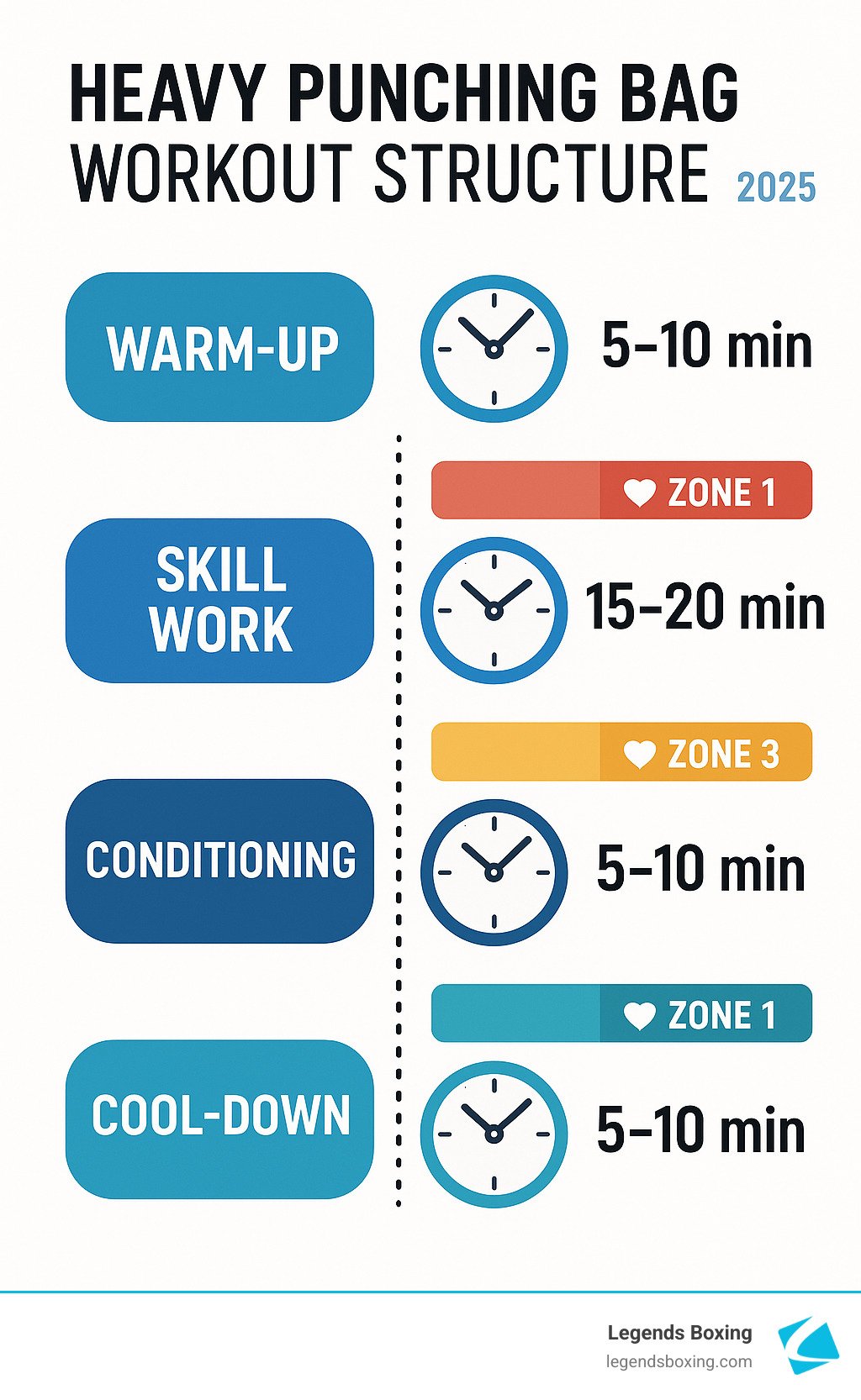
Creating effective training sessions on a boxing bag helps improve skill and fitness. Structured workouts build endurance, strength, and technique. Planning each session keeps you motivated and focused. Balance intensity with rest to avoid injury and burnout. Follow clear steps to make training productive and fun.
Warm-up And Cool-down
Start with a warm-up to prepare your body. Light jogging or jump rope for 5-7 minutes increases blood flow. Stretch your arms, shoulders, and legs gently. This reduces muscle stiffness and risk of injury. After training, cool down with slow punches and deep breathing. Finish with full-body stretches to relax muscles.
Interval Training
Use intervals to boost power and stamina. Alternate between high-intensity punching and short rest periods. For example:
- 30 seconds of fast punches
- 15 seconds rest or slow movement
- Repeat for 6 to 10 rounds
This method improves speed and endurance quickly. Change punching styles during intervals to work different muscles. Keep your guard up and focus on technique.
Tracking Progress
Record your training to see improvement. Note down:
- Duration of each session
- Number of rounds completed
- Types of punches practiced
- How you felt during and after
Review your notes weekly. Adjust training plans based on progress. Tracking helps you stay motivated and reach goals faster.

Common Mistakes To Avoid
Training on a boxing bag is a fantastic way to boost your skills and fitness. However, many make mistakes that slow progress or lead to injury. Recognizing and avoiding these common errors can help you train smarter and see better results.
Poor Technique
Throwing punches with bad form is a common pitfall. You might feel powerful, but poor technique wastes energy and increases injury risk.
Focus on your stance, hand positioning, and punch execution. For instance, not rotating your hips during a hook reduces power and strains your wrist.
Ask yourself: Are you watching your form or just hitting hard? Recording your sessions can reveal flaws you don’t notice while training.
Overtraining
It’s tempting to go all out every session, but overtraining can backfire. Your muscles and joints need time to adapt and heal.
Signs like persistent soreness, fatigue, or declining performance mean you’re pushing too hard. Instead, pace your workouts and build gradually.
Remember, quality beats quantity. Short, focused sessions with proper breaks often bring better results than long, exhausting ones.
Ignoring Recovery
Skipping recovery can stall progress and increase injury risk. Your body repairs and strengthens itself during rest, not just while training.
Include activities like stretching, foam rolling, or light cardio to help your muscles recover. Hydrating and getting enough sleep also play a huge role.
Think about your last tough session: Did you give your body enough downtime before hitting the bag again? If not, your gains might be harder to maintain.
Maximizing Impact And Results
Training on a boxing bag requires more than just hitting hard. To get the best results, focus on technique, strength, and regular practice. This approach improves power and endurance. It also helps avoid injuries. Small changes in training can lead to big improvements.
Focus On Form
Good form means hitting the bag correctly. Keep your wrists straight to avoid injury. Use your whole body, not just your arms. Rotate your hips and shoulders with each punch. Keep your feet moving and balanced. Watch your breathing—exhale with every hit.
Incorporate Strength Training
Strong muscles improve punching power and speed. Add exercises like push-ups, squats, and planks. Use light weights or resistance bands for extra strength. Focus on core exercises to stabilize your body. Strong legs give better movement and balance.
Stay Consistent
Regular training builds skill and fitness. Set a schedule and stick to it. Short, frequent sessions work better than rare long ones. Track your progress to stay motivated. Rest is important—allow time for muscle recovery.
Frequently Asked Questions
How Often Should I Train On A Boxing Bag?
Training on a boxing bag 3 to 5 times weekly is ideal. It builds strength, improves technique, and boosts endurance efficiently without overtraining.
What Are The Best Punches To Practice On A Boxing Bag?
Focus on jabs, crosses, hooks, and uppercuts. These punches improve speed, power, and accuracy, essential for effective boxing training.
How Long Should Each Boxing Bag Session Last?
Each session should last 20 to 30 minutes. This duration balances intensity and recovery for optimal skill development and fitness gains.
Do I Need Special Gloves For Boxing Bag Training?
Yes, use boxing gloves or bag gloves. They protect your hands and wrists, preventing injuries during intense bag workouts.
Conclusion
Training on a boxing bag builds strength and improves your skills. Practice regularly to see steady progress. Focus on your form and breathing while punching. Rest between rounds to avoid injury and stay fresh. Remember, patience and consistency bring the best results.
Keep challenging yourself and enjoy the process. Boxing bag workouts can boost fitness and confidence. Stay safe, train smart, and have fun every time you hit the bag.