

You're getting ready to fly, and you've packed everything you need for a smooth journey. But wait, there's one gadget you can't live without—your power bank.
It's your lifeline for keeping your devices charged during long flights or layovers. But here's the million-dollar question: is a power bank allowed in your carry-on luggage? Before you zip up your suitcase, you need to know the rules. Imagine being stopped at security, your power bank taken away, leaving you powerless.
It's a worry no traveler wants. Dive into this article to ensure your trip goes off without a hitch. Discover what's allowed, what's not, and how to travel smart with your power bank. Let's clear the air so you can fly stress-free.

Carry-on Rules For Power Banks
Power banks are popular travel accessories. They keep devices charged during trips. Many travelers wonder about carry-on rules for power banks. Airlines and security have specific guidelines. Knowing these rules helps avoid delays and confusion at the airport.
Airline Regulations
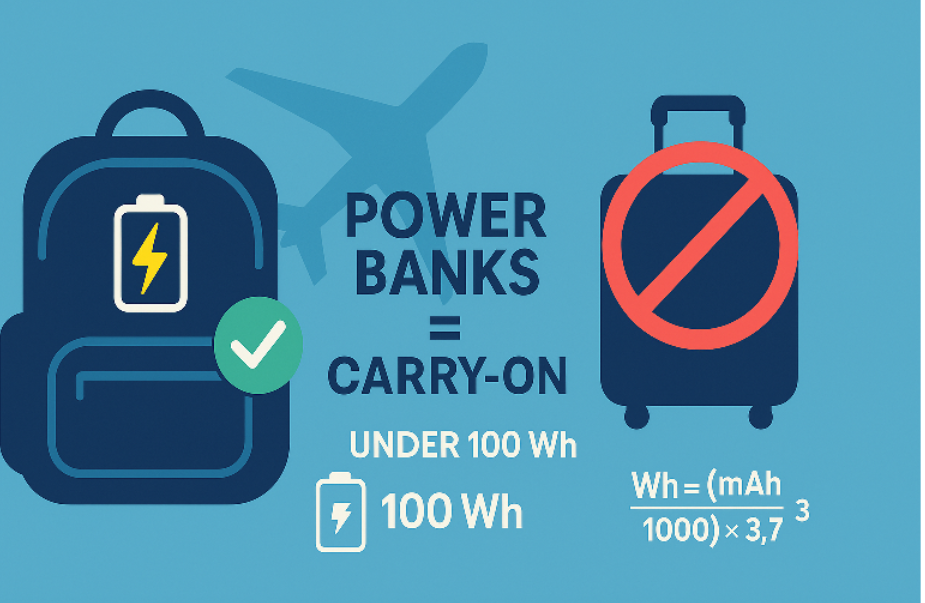
Most airlines allow power banks in carry-on bags only. Checked luggage is usually not permitted for power banks. Airlines set limits based on battery capacity. Power banks with capacity under 100Wh are generally accepted. Those between 100Wh and 160Wh need airline approval. Power banks above 160Wh are often banned. Always check your airline’s rules before packing.
Security Checkpoint Procedures
Power banks must be screened separately at security checkpoints. Remove them from your bag and place them in a bin. Security staff may inspect the device for safety. Carry power banks with visible labels showing capacity. Large or unusual power banks may cause extra screening. Follow instructions from security officers to speed up the process.
Capacity Limits For Power Banks
Understanding the capacity limits for power banks is crucial before packing them in your carry-on luggage. Airlines and regulatory bodies set specific restrictions to ensure safety during flights. Knowing these limits helps you avoid hassles at security checkpoints and keeps your devices charged throughout your journey.
Watt-hour Ratings Explained
Power banks are rated by their watt-hour (Wh) capacity, which measures the amount of energy they can store. This rating is more informative than milliampere-hours (mAh) because it accounts for voltage differences. To calculate watt-hours, multiply the power bank’s voltage by its ampere-hours (Ah).
For example, a 5,000mAh power bank with a voltage of 3.7V equals 18.5Wh (5,000mAh ÷ 1,000 × 3.7V). This number determines if your power bank is allowed on board. Most airlines permit power banks under 100Wh without extra approval.
Limits By Airline And Region
Different airlines and regions enforce varying rules on power bank capacities. In the U.S., the TSA allows power banks up to 100Wh in carry-on bags, but those between 100Wh and 160Wh require airline approval. Any power bank over 160Wh is usually banned from passenger aircraft.
European airlines generally follow similar guidelines but may have subtle differences. For instance, some carriers limit the number of power banks you can carry or require them to be individually protected against short circuits. Always check your airline’s specific rules before traveling.
- Under 100Wh:Allowed in carry-on without approval.
- 100Wh to 160Wh:Allowed with airline approval; typically limited to two units.
- Over 160Wh:Not allowed in carry-on or checked baggage.
Have you ever been stopped at airport security because of your power bank? Being aware of these capacity limits helps you avoid that awkward moment and keeps your devices ready for use when you land.
Packing Tips For Power Banks
Carrying a power bank in your carry-on can be a lifesaver during travels, but packing it correctly is crucial to avoid any hassle at airport security or potential damage. Knowing how to store and handle your power bank ensures it stays safe and compliant with airline rules. Let’s dive into simple yet effective packing tips that can make your travel smoother and stress-free.
Proper Storage Methods
Always keep your power bank in your carry-on bag, not in checked luggage. Airlines typically allow power banks in carry-ons because they need to be accessible and monitored during the flight.
Use a protective case or pouch to prevent scratches and accidental button presses. A soft pouch also keeps it from bumping against other items, which can damage the battery.
Make sure the power bank is turned off before packing. Even if it has an automatic shut-off, manual power off adds an extra layer of safety.
Avoiding Common Mistakes
Don’t pack your power bank loosely inside your bag where it can move around freely. Loose items can get damaged or cause damage to other belongings.
Check your power bank’s capacity before traveling. Many airlines restrict power banks over 100Wh or require approval for those between 100Wh and 160Wh. Carrying an oversized power bank can lead to confiscation or fines.
Have you ever forgotten to check the airline’s rules and ended up leaving your power bank behind? Avoid last-minute surprises by reviewing regulations ahead of time and keeping receipts or documentation handy if needed.
Power Banks In Checked Luggage
Carrying power banks in checked luggage is a topic that often confuses travelers. Many wonder if stashing these handy devices in their suitcases is allowed or if it could cause issues at the airport. Understanding the rules can save you from last-minute hassles and ensure a smooth travel experience.
Why It's Usually Prohibited
Power banks contain lithium-ion batteries, which are sensitive and can pose fire risks if damaged or short-circuited. Airlines and regulators usually prohibit them in checked luggage to reduce the chance of a battery fire in the cargo hold, where it’s harder to detect and control.
Imagine your suitcase getting tossed around during loading. A damaged battery could overheat and ignite, putting the entire flight at risk. That’s why safety protocols prioritize keeping power banks in the cabin, where crew members can respond quickly if something goes wrong.
Exceptions And Special Cases
There are situations where power banks might be allowed in checked luggage, but these come with strict conditions. For example, some airlines permit power banks with a very low watt-hour (Wh) rating, typically under 100Wh, to be checked in.
Additionally, if a power bank is installed inside a device (like a laptop or camera), it’s often allowed because it’s better protected. However, carrying loose or spare power banks in checked bags is almost always restricted.
Have you ever tried to check in a power bank and faced confusion at security? Checking your airline’s specific rules before packing can save you from delays and possible confiscation.
Safety Concerns And Regulations
Power banks are common travel accessories. Their convenience comes with safety concerns and strict regulations. Airlines and safety bodies set rules to avoid accidents. Understanding these rules helps ensure safe travel and compliance.
Fire Risks And Battery Hazards
Power banks contain lithium-ion batteries. These batteries can catch fire if damaged or overheated. Short circuits or physical damage may cause sparks or explosions. Carrying power banks improperly increases fire risks onboard. Airlines require passengers to handle power banks carefully to prevent hazards.
Overcharging or using low-quality chargers can also lead to battery failure. Fire from lithium batteries spreads quickly and is hard to control. For this reason, airlines limit power bank capacity and quantity in carry-on baggage. Proper storage and use reduce the risk of battery hazards.
Compliance With International Standards
Power banks must meet specific international safety standards. These include limits on battery capacity, usually measured in watt-hours (Wh). Most airlines allow power banks up to 100Wh without special approval. Power banks between 100Wh and 160Wh often require airline permission. Larger batteries are generally banned in carry-on luggage.
Manufacturers must label power banks clearly with capacity and safety information. Passengers should check airline rules before travel. International bodies like IATA provide guidelines to ensure safe transport of lithium batteries. Following these standards helps avoid delays and confiscation at airports.

Alternative Charging Options
When you can’t bring your power bank onboard or want to avoid the hassle of carrying extra gadgets, alternative charging options come in handy. These solutions keep your devices powered without breaking airline rules or adding bulk to your carry-on. Let’s look at some practical ways to stay charged while traveling.
Portable Solar Chargers
Portable solar chargers are a smart choice if you spend a lot of time outdoors or want a green energy option. These devices use sunlight to recharge your phone or other gadgets, making them perfect for hiking or long layovers.
They’re lightweight and often foldable, so they fit easily in your backpack. I once charged my phone fully during a sunny afternoon at an airport park using a compact solar charger. It saved me from scrambling for an outlet inside the terminal.
- Look for models with multiple USB ports to charge several devices at once.
- Check the wattage—higher wattage means faster charging.
- Ensure it has a built-in battery to store power for cloudy days or nighttime use.
In-flight Charging Solutions
Many modern airplanes offer in-flight charging, but availability varies by airline and aircraft. Before your trip, check if your flight provides USB ports or power outlets at your seat.
If your seat lacks charging facilities, consider bringing a small, airline-approved charging device like a hand-crank charger or a battery case for your phone. These tools can give your device a quick boost without violating airline policies.
- Pack a short charging cable to avoid tangling and save space.
- Bring a multi-port USB adapter if you travel with multiple devices.
- Charge your devices fully before boarding to stretch your battery life during the flight.
Have you ever found yourself with a dead phone mid-flight? How did you handle it? Exploring these alternative charging options can help you avoid that frustration and keep your devices ready when you need them most.
Frequently Asked Questions
Can I Carry A Power Bank In My Carry-on Luggage?
Yes, you can carry a power bank in your carry-on bag. Airlines and security allow it, but there are size limits and quantity restrictions.
Are Power Banks Allowed In Checked Baggage On Flights?
No, power banks are typically not allowed in checked baggage. They must be carried in carry-on luggage due to fire safety regulations.
What Is The Maximum Power Bank Capacity Allowed On Planes?
Most airlines allow power banks up to 100Wh without approval. For 100-160Wh, airline approval is needed. Above 160Wh, power banks are usually prohibited.
How Should I Pack My Power Bank For Air Travel?
Keep your power bank in your carry-on bag. Ensure it is protected from short circuits and avoid carrying damaged or swollen batteries.
Conclusion
Carrying a power bank in your carry-on bag is usually allowed. Airlines set rules to keep everyone safe during flights. Most power banks must have a capacity below 100Wh to be accepted. Always check your airline’s specific guidelines before you travel.
Keep the power bank in your hand luggage, not in checked bags. This helps avoid any problems at security checks. Knowing these rules makes your journey smoother and stress-free. Stay prepared and enjoy your trip without worries about your power bank.