

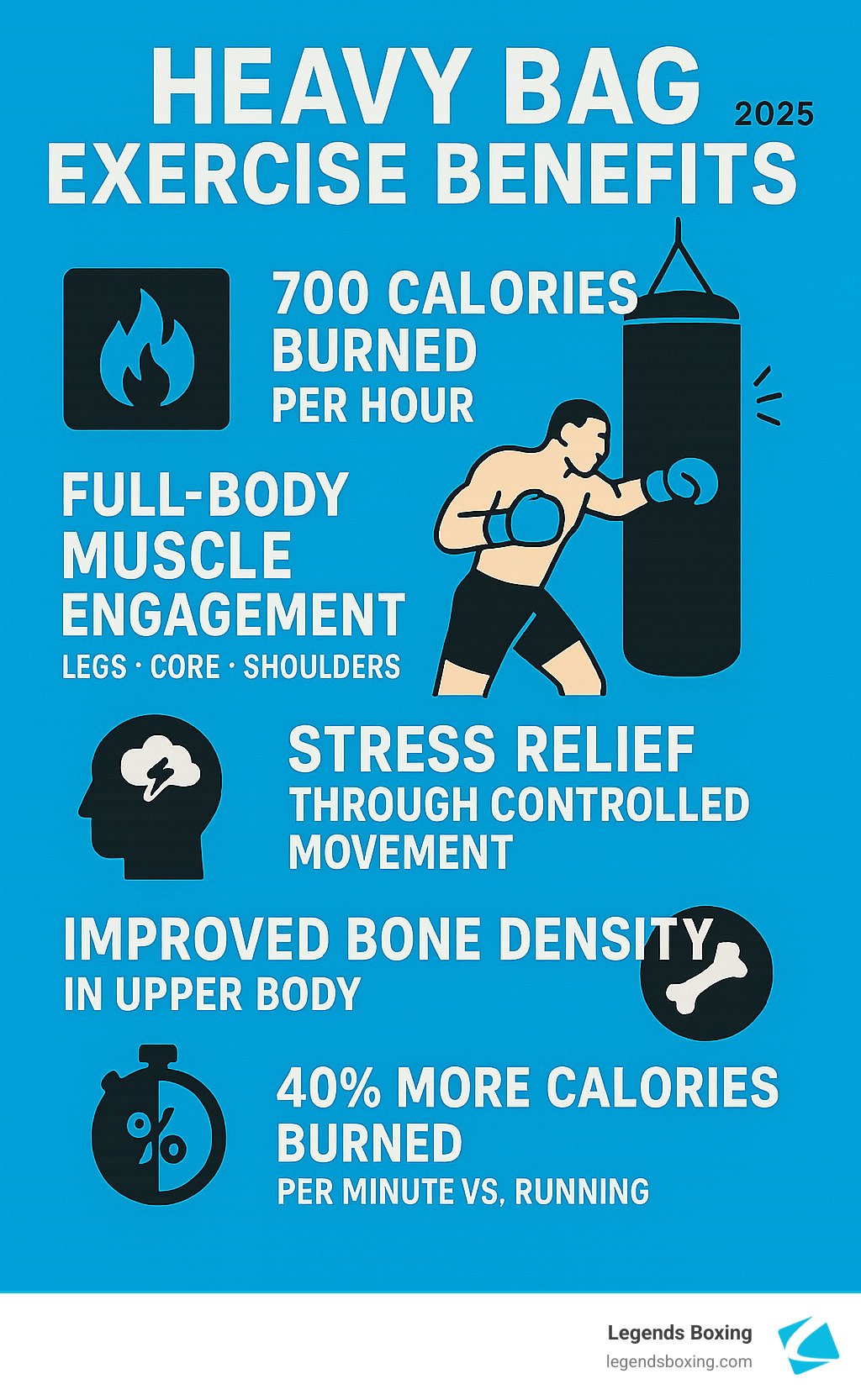
Ever wondered if those powerful punches you throw at a heavy bag can do more than just relieve stress? You're not alone.
Many fitness enthusiasts like you are curious about the benefits of this intense workout. Does punching a bag really build muscle, or is it just a cardio exercise? Before you lace up your gloves and head to the gym, let's explore what happens to your muscles when you engage in this high-energy activity.
Stick around to discover how this workout could transform not only your body but also your fitness routine. You won't want to miss out on these surprising insights that could revolutionize the way you approach your workouts.

Credit: www.legendsboxing.com
Punching Bag Basics
Punching bags are a popular tool for fitness and training. They help improve strength, speed, and coordination. Before starting, understanding the basics of punching bags is important. This knowledge helps in choosing the right bag and using it effectively. The right bag matches your fitness level and goals. It also suits the space you have for workouts.
Types Of Punching Bags
- Heavy Bag:A large, dense bag for power punches and kicks.
- Speed Bag:A small, fast-moving bag to improve hand speed and rhythm.
- Double-End Bag:A bag attached by two cords for accuracy and timing.
- Freestanding Bag:A bag on a base, easy to move and place anywhere.
Choosing The Right Bag
Consider your training goals before picking a bag. Heavy bags build power and muscle by requiring strong punches. Speed bags help develop quick hands but do not build much muscle. Double-end bags improve timing and reflexes. Freestanding bags offer convenience and flexibility.
Think about space and budget too. Heavy bags need hanging space. Freestanding bags fit small rooms. Choose a bag weight that matches your strength. A bag that is too heavy or light can cause injury or limit progress.

Credit: www.legendsboxing.com
Muscle Groups Worked
Punching a bag works many muscles across your body. It is not just about arms or shoulders. The activity involves strength, speed, and coordination. Different muscle groups activate to help you strike, move, and stay balanced. Understanding these muscles shows how bag work can aid muscle building and fitness.
Upper Body Engagement
Your arms, shoulders, and chest do most of the punching work. The biceps and triceps help in extending and retracting your arms. The deltoids in your shoulders power each punch with force. The pectoral muscles in your chest add strength and stability. Even the upper back muscles, like the trapezius, assist in controlling arm movements.
Core Activation
The core muscles keep your body stable during punches. The abdominals tighten to transfer power from your legs to your fists. The obliques twist your torso for stronger, faster punches. A strong core helps maintain balance and posture. It also protects your spine from injury.
Lower Body Support
Your legs and hips provide a solid base for punching. The quadriceps and hamstrings support bending and extending the knees. The glutes activate to help push your body forward. Calves stabilize your stance and help with quick footwork. This lower body strength allows you to generate more power in each punch.
Strength Vs. Endurance
When you punch a bag, are you really building muscle or just getting better endurance? Understanding the difference between strength and endurance helps you set clear goals for your workout. Strength is about how much force your muscles can produce, while endurance is about how long your muscles can keep working without getting tired.
Muscle Toning Benefits
Punching a bag regularly can help tone your muscles, especially in your arms, shoulders, and core. It improves muscle endurance, allowing your muscles to perform repetitive actions without fatigue. This kind of training is great if you want a lean, defined look rather than bulky muscles.
You might notice your arms feeling firmer after a few weeks of bag workouts. That’s because your muscles are adapting to handle sustained activity. It’s similar to how runners build leg endurance but don’t necessarily bulk up.
Building Raw Strength
If your goal is to build raw muscle strength, punching a bag alone might not be enough. Bag work focuses on speed, coordination, and stamina, but it doesn’t provide the heavy resistance your muscles need to grow bigger and stronger.
To build strength, you need to challenge your muscles with weights or resistance training. Think about how lifting heavy weights causes muscle fibers to tear and rebuild stronger. Punching a bag can complement this, but it won’t replace the need for targeted strength exercises.
Have you ever felt exhausted after a long bag session but not necessarily stronger in a lift? That’s the endurance effect at work. Mixing strength training with bag work creates a balanced routine that improves both power and stamina.

Credit: www.legendsboxing.com
Effective Punching Techniques
Mastering effective punching techniques is key to building muscle while working with a punching bag. It's not just about hitting hard; it's about how you hit. Focusing on your form and power generation can transform your workout from a simple cardio routine to a muscle-building session.
Proper Form
Proper form protects your joints and maximizes the muscle engagement with every punch. Keep your wrists straight and aligned with your forearms to avoid injury and ensure force travels efficiently. Rotate your hips and pivot your back foot with each punch to involve your core and lower body muscles.
Imagine throwing a punch without turning your body—you miss out on activating major muscle groups like your obliques and glutes. Pay attention to your stance: feet shoulder-width apart, knees slightly bent. This stance provides stability and lets you generate more controlled power.
Power Generation
Power doesn’t come from your arms alone; it starts from the ground up. Use your legs to push off the floor, your hips to twist, and your shoulders to snap the punch forward. This chain reaction recruits multiple muscle groups, helping you build strength and endurance.
Think about how boxers make their punches feel explosive yet controlled. They engage their entire body instead of relying on arm strength alone. Can you feel the difference when you add a hip twist to your jab or cross? That extra torque is what builds muscle effectively.
- Engage your core to stabilize and transfer power.
- Keep your punches sharp and fast, not just heavy.
- Practice breathing out with each strike to maintain rhythm and power.
Training Frequency And Intensity
Punching a bag can be a powerful way to build muscle, but how often and how hard you train makes a big difference. Your body needs the right balance of challenge and rest to actually grow stronger. Training frequency and intensity are key factors that decide whether your punching bag workouts will help you build muscle or just burn calories.
Optimal Workout Duration
Short, intense sessions often work better than long, drawn-out workouts. Aim for 20 to 30 minutes of focused bag work, where you keep your energy high and strikes powerful. This duration helps you maintain good form and maximizes muscle engagement without causing excessive fatigue.
Think about your last workout: did you find yourself slowing down halfway through? That’s a sign you might be overdoing it and losing the muscle-building benefits. Try breaking your workout into rounds with short breaks to keep intensity up.
Balancing Rest And Recovery
Muscles don’t grow while you’re punching; they grow when you rest. If you hit the bag too often without giving your body time to recover, you risk overtraining and injury. Scheduling at least one rest day between heavy sessions lets your muscles repair and grow stronger.
Listen to your body. Feeling unusually sore or drained? It might be time to back off for a day or two. Rest doesn’t mean stopping all movement—you can do light stretching or gentle cardio to stay active without stressing your muscles.
Supplementing With Other Exercises
Punching a bag is great for endurance and coordination. Yet, building muscle usually needs more variety. Adding other exercises helps target different muscle groups. It also improves strength and overall fitness. Combining workouts creates a balanced routine that supports muscle growth and fitness goals.
Weight Training
Weight training is key for muscle building. Lifting weights stresses muscles, causing growth. Focus on compound moves like squats, deadlifts, and bench presses. These exercises engage multiple muscles at once. Use free weights or machines based on your comfort. Aim for controlled movements with proper form. Increase weight gradually to keep challenging muscles.
Cardio Integration
Cardio improves heart health and stamina. It burns fat, helping muscles show more clearly. Include moderate cardio sessions like jogging, cycling, or swimming. Keep cardio sessions shorter to avoid muscle loss. Balancing cardio and strength training helps maintain muscle mass. It also boosts recovery and energy for workouts.
Common Mistakes To Avoid
Avoiding common mistakes is key to building muscle effectively with punching bag workouts. Many people think hitting the bag is simple, but poor habits can cause injury or slow progress. Understanding what to avoid helps you train smarter and safer.
Focus on quality, not just quantity. Proper form and rest matter more than endless punches. Recognize these common errors to improve your workout and protect your body.
Poor Technique Risks
Incorrect punching form can cause joint pain and muscle strain. Striking the bag with locked wrists or bent elbows increases injury risk. Lack of hip rotation reduces power and muscle activation. Avoid swinging wildly; it wastes energy and may harm your shoulders. Learning proper stance and punch mechanics boosts muscle gains and prevents damage.
Overtraining Dangers
Training too often without rest hinders muscle growth. Muscles need time to repair and grow stronger after workouts. Overtraining leads to fatigue, soreness, and possible injuries. Balance intense sessions with recovery days to improve results. Watch for signs like constant tiredness or persistent pain. Rest is part of building muscle, not a weakness.
Tracking Progress
Tracking progress is essential when using a punching bag to build muscle. It helps you see real changes and stay motivated. Without tracking, it is hard to know if your efforts are paying off. Simple tools and clear goals make progress easy to follow.
Measuring Strength Gains
Strength gains show how your muscles improve over time. Use exercises like push-ups or pull-ups to test your power. Note how many reps you can do at the start and after weeks of training. Another way is to time how long you can punch hard without getting tired.
Keep a workout journal. Write down your punching speed, force, and endurance. Small improvements add up and prove your strength is growing. Regular tests every two weeks can show clear progress.
Monitoring Muscle Growth
Muscle growth can be subtle. Use a tape measure to check the size of your arms, shoulders, and chest. Measure the same spots each week. Photos taken in the same light and position help you see changes visually.
Muscles may feel firmer or look more toned after a few weeks. Tracking these changes shows your punching bag workouts are effective. Combine measurements and photos for the best results.
Frequently Asked Questions
Does Punching A Bag Help Build Muscle Mass?
Punching a bag can help build muscle endurance and tone muscles. It engages arms, shoulders, chest, and core but may not significantly increase muscle size alone.
How Often Should I Punch A Bag To Build Muscle?
For muscle benefits, punch the bag 3-4 times a week. Consistency and intensity are key to seeing muscle tone and strength improvements.
Which Muscles Does Punching A Bag Primarily Work?
Punching a bag mainly targets shoulders, arms, chest, and core muscles. It also engages legs for stability and power during the workout.
Can Punching A Bag Replace Weightlifting For Muscle Building?
Punching a bag improves muscle endurance but doesn't replace weightlifting. Weightlifting is better for building muscle size and strength through resistance training.
Conclusion
Punching a bag helps build muscle, but not alone. It tones your arms, shoulders, and core with regular effort. To grow bigger muscles, add weight training and good nutrition. Punching bag workouts improve strength and endurance too. They keep your body active and healthy.
Try combining different exercises for best results. Stay consistent and patient for muscle growth. This simple tool supports your fitness journey well. Keep punching, stay strong, and enjoy progress.